Boardroom Veto: How Risk-Averse Leadership Is Killing the Chinese Deals Their Own Teams Negotiated
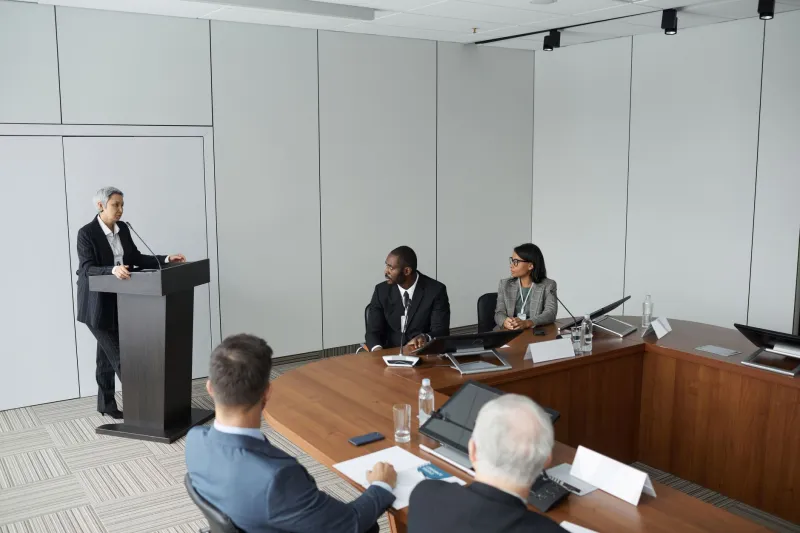
There is a particular kind of frustration that settles over a deal team when months of relationship-building, financial modeling, and cross-Pacific travel culminate not in a signed agreement, but in a two-hour board presentation that ends with the words: "We need more time to assess the risk." In Sino-American commerce, that phrase has become something of an obituary. More often than not, more time means no deal.
The phenomenon is more widespread than most companies are willing to acknowledge publicly. Frontline negotiators—often fluent in the cultural cadences of Chinese business, comfortable with ambiguity, and genuinely enthusiastic about the strategic upside—are finding themselves caught between two worlds: Chinese partners who have extended rare trust, and American boards that remain fundamentally unprepared to evaluate what they are being asked to approve.
The Anatomy of a Collapsed Deal
Consider the experience of a mid-sized Midwest industrial manufacturer—call them Hartwell Components—that spent fourteen months cultivating a co-development partnership with a Shenzhen-based precision engineering firm. The deal team had done everything right. They had conducted multiple site visits, engaged a bilingual legal counsel with China-specific expertise, and structured terms that protected Hartwell's core IP while offering their Chinese counterpart genuine upside in shared licensing revenue. The financial projections were conservative by design, the risk disclosures transparent.
When the proposal reached Hartwell's board, it was dead within sixty days. Not because the numbers were wrong. Not because the Chinese partner had failed due diligence. It collapsed because three board members—all of them accomplished executives with deep domestic track records—had absorbed a steady diet of geopolitical headlines and arrived at the meeting having already decided. The deal team's carefully assembled dossier was treated not as evidence to be evaluated, but as advocacy to be scrutinized.
Hartwell is not an outlier. Across sectors—from clean energy to consumer goods to advanced manufacturing—the same dynamic plays out with remarkable consistency. The deal team speaks the language of opportunity. The board speaks the language of liability. And the Chinese partner, watching from the other side of the Pacific, quietly withdraws.
Why Boards Fail the Test
The disconnect is structural as much as it is psychological. Most American corporate boards were not designed to evaluate cross-border deals with the granularity that China-facing opportunities require. Standard due diligence frameworks—built around OECD-market assumptions about regulatory transparency, contract enforceability, and political stability—translate poorly to the Chinese business environment. When boards apply these frameworks mechanically, they are not being rigorous. They are being imprecise.
Geopolitical anxiety compounds the problem. Since roughly 2018, the volume of negative coverage surrounding U.S.-China commercial relations has been relentless. Export controls, entity lists, congressional hearings, and think-tank reports warning of strategic dependency have created an ambient hostility that many board members absorb without distinguishing between sectors, deal structures, or the specific characteristics of individual Chinese partners. A board member who has read about forced technology transfer in the semiconductor industry may apply that anxiety—however irrationally—to a joint marketing arrangement in consumer retail.
There is also a subtler issue of accountability asymmetry. Approving a China deal that later encounters difficulty is a career-defining mistake for a board member. Rejecting a China deal that would have succeeded is invisible. The incentive structure tilts overwhelmingly toward caution, regardless of the commercial merits.
The Preparation Gap
A second anonymized case illustrates a different failure mode. A Pacific Northwest logistics technology company—call them ClearPath Systems—had negotiated a distribution partnership with a Shanghai-based freight-forwarding group. The deal team had retained a respected consulting firm to produce a China-specific risk assessment and had structured the agreement with clear exit provisions and arbitration clauses under Hong Kong jurisdiction.
What they had not done was prepare their board. The risk assessment landed in board members' inboxes forty-eight hours before the meeting. The presentation assumed a baseline familiarity with Chinese commercial law and regulatory frameworks that simply did not exist in the room. When questions arose about variable interest entity structures and data localization requirements, the deal team answered competently but could not bridge the gap between technical accuracy and boardroom comprehension. The proposal was tabled indefinitely.
The ClearPath failure was not a failure of the deal. It was a failure of internal communication strategy. The team had invested enormously in educating their Chinese partners about American corporate governance expectations. They had invested almost nothing in educating their own board about Chinese commercial realities.
A Framework for Closing the Gap
Companies that consistently succeed in bringing China deals across the finish line share several practices that their less successful peers tend to overlook.
Begin board education before the deal exists. The most effective China-facing companies treat board literacy as an ongoing investment, not a pre-approval scramble. Regular briefings on Chinese regulatory developments, sector-specific risk profiles, and successful comparable transactions—delivered during periods of no immediate decision pressure—create a board that is genuinely capable of evaluation rather than one that defaults to veto.
Translate opportunity into the board's native language. Board members respond to frameworks they recognize. Rather than asking a board to accept Chinese business norms on their own terms, experienced deal teams reframe the opportunity within familiar risk-adjusted return models, drawing explicit comparisons to deals the board has previously approved. The goal is not to minimize legitimate concerns, but to ensure they are being weighed against an accurate picture of upside.
Bring in credible external voices. A deal team's enthusiasm, however well-founded, is inherently suspect in a boardroom context. Engaging a neutral third party—whether a former U.S. Trade Representative official, a senior partner from an internationally recognized law firm, or an academic with China business expertise—to address the board directly can shift the dynamic from advocacy to analysis.
Sequence the presentation strategically. Lead with the strategic rationale in terms the board already cares about: market access, competitive positioning, supply chain resilience. Address geopolitical risk explicitly and early, rather than allowing it to become the subtext that overwhelms everything else. Boards that feel their concerns are being anticipated rather than dismissed are far more likely to engage constructively.
Build in structured checkpoints. Boards are more comfortable approving a phased process than a single large commitment. Deal structures that incorporate defined review milestones—with clear criteria for continuation or exit—give risk-averse governance bodies a sense of control that can unlock initial approval.
The Cost of Inaction
The deals that die in American boardrooms do not simply disappear. Chinese partners do not wait indefinitely. They find other counterparts—often European, occasionally Southeast Asian—who are willing to move. The competitive cost of board-level paralysis is not merely the loss of a single opportunity. It is the gradual erosion of market position in one of the world's most consequential commercial arenas.
For American companies serious about China-facing growth, the boardroom is not an obstacle to be navigated around. It is a capability to be built. The companies that understand this—and invest accordingly—are the ones whose deal teams will still have something to celebrate when the ink finally dries.