Five Reasons Your Next Sourcing Partner Is Waiting in Ningbo, Not Shanghai
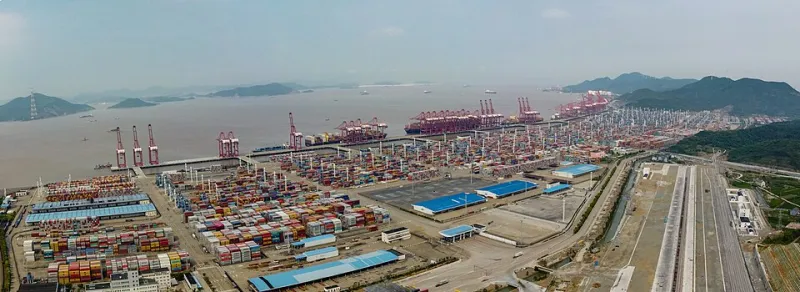
Photo: Nbfreeh, CC BY-SA 4.0, via Wikimedia Commons
Ask an American sourcing manager where their supplier search begins and the answer is usually the same short list: Shanghai, Shenzhen, Guangzhou, Suzhou. These cities dominate the mental map of China manufacturing the way New York and Los Angeles dominate the mental map of American commerce. But dominance on the map does not equal advantage on the factory floor.
Tier-two and tier-three cities—Ningbo, Wuxi, Changzhou, Dongguan's quieter neighbors—are where the next generation of supplier relationships is being formed. Here are five reasons to widen the search, and the verification steps each one requires.
1. The Cost Curve Has Flipped
Land, labor, and overhead in tier-one hubs have climbed steadily for a decade. A mid-size component manufacturer outside Shanghai may face facility costs two to three times those of a comparable operation in Ningbo or Jiaxing. Some of that savings flows to the supplier's margin; competitive pressure pushes much of it into your pricing.
Due diligence step: Cost advantage can mask capability gaps. Require audited financials or at minimum a third-party credit report, and benchmark quoted unit prices against tier-one comparables to confirm the savings are real and sustainable, not a lowball to win the first order.
2. Hungrier Suppliers, Faster Responses
In Shanghai, a mid-size American buyer is one of thousands. In Ningbo—home to one of the world's busiest ports and a dense cluster of tooling, plastics, and electromechanical suppliers—a serious American order gets attention. Quotations come back faster. Engineering questions get answered by people who can actually change the process. Sampling cycles shrink.
Due diligence step: Attention at the sales stage is not attention at the production stage. Ask to meet the plant manager and the quality director, not just the export sales team. If senior operations staff are absent from your meetings, expect the same absence after the purchase order is signed.
3. Specialized Industrial Ecosystems
Tier-two cities are not generic manufacturing zones; they are often singularly specialized. Ningbo and nearby Cixi dominate plastics and small appliances. Wuxi anchors precision machinery and IoT hardware. Hefei has become a center for advanced display and EV supply chains. This concentration means shorter sub-supplier distances, faster tooling iterations, and deeper local talent pools in the specific capability you need.
Due diligence step: Verify that the supplier's specialization matches yours. A factory in a plastics cluster that outsources its electronics is a different risk profile than a vertically integrated operation. Map the sub-supplier chain within a two-hour radius and identify single points of failure.
4. Less Competition for Capacity
Tier-one factories juggle blue-chip clients with enormous volumes. Your order may be the first cut when capacity tightens—a pattern American buyers experienced painfully during recent supply chain disruptions. In smaller hubs, a mid-size buyer can be a top-ten customer, which changes everything: priority scheduling, willingness to hold safety stock, flexibility on engineering changes.
Due diligence step: Ask directly what percentage of capacity your projected volumes would represent, and request references from Western clients of similar size. A supplier for whom you would be a meaningful customer will behave differently than one for whom you are a rounding error.
5. Government Incentives That Actually Reach You
Provincial and municipal governments outside tier-one cities compete hard for foreign-invested projects, offering tax holidays, subsidized facilities, and expedited licensing. While these benefits accrue primarily to the supplier, a well-incentivized partner is a partner investing in capability—new equipment, certifications, expansion.
Due diligence step: Incentives can also signal volatility; a factory built on subsidy economics may struggle when they expire. Review the supplier's own investment in equipment over the past three years and confirm quality certifications (ISO 9001 at minimum, sector-specific ones as relevant) through an on-site audit, not a certificate photograph.
The Bottom Line
The tier-one hubs will always matter—for finance, for talent, for proximity to decision-makers. But the arithmetic of sourcing has shifted. For American buyers willing to do slightly heavier diligence in less-documented markets, the second cities offer the combination that has become rare in Shanghai: competitive cost, genuine attention, and room to grow together.