The Line Doesn't Negotiate: Auditing Chinese Suppliers Where the Work Actually Happens
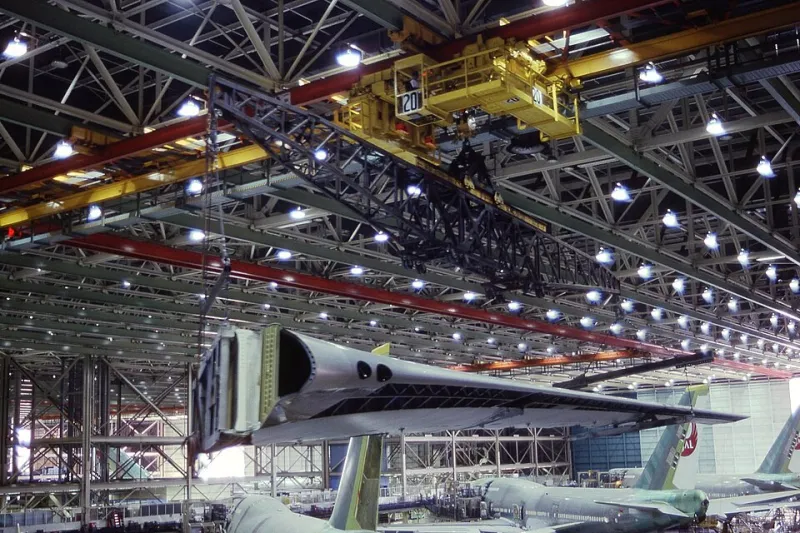
Photo: Peter Garwood, CC BY 4.0, via Wikimedia Commons
A supplier visit in China usually follows a script. The car arrives, the conference room is prepared, the presentation runs to thirty slides, the sample room is immaculate, and lunch is generous. By the time the American buyer boards the return flight, the impression is of a well-run operation, and the documentation supports it.
The difficulty is that none of that is evidence of capacity. It is evidence of hospitality, and of a company that has learned how to host. The information a US buyer actually needs—whether the line can run at the promised rate next quarter, whether the workforce will still be there after Spring Festival, whether the quality system operates on the floor or only in the manual—sits one door away from the conference room, in a place that is rarely visited and even more rarely read correctly.
The Slide Deck Is a Genre With Conventions
Presentations from Chinese manufacturers are highly polished because the market demands it. Buyers request them, agents compare them, and export departments refine them continuously. A deck may accurately describe the company's best line, its newest equipment, and its most demanding customer. It may also describe a configuration that exists for audits and exhibitions rather than for the order you are placing.
Sample rooms carry a similar ambiguity. A sample is a handmade object produced under supervision, often by the most senior technician on staff. The production line is a system operated by whoever is available, at whatever pace the schedule permits. The distance between the two is one of the most reliable predictors of a difficult first year.
Three Questions the Floor Answers
Can this site actually produce our volume? Not nameplate capacity—operating capacity. Look at takt time on the line against the rate quoted in the deck, at how much work-in-process is queued between stations, and at whether any line is idle at a time the schedule says it should be running.
Will the workforce be stable? Tooling can be bought; people cannot be ordered. Observe how many faces look new, whether training boards carry recent dates, how shifts are staffed, and whether the plant draws on a dormitory or a commuting labor pool. In parts of Guangdong and Zhejiang, seasonal labor flow materially changes output from one quarter to the next.
Does the quality system operate in practice? A certified system and a functioning one are different things. Find the inspection stations, the calibration labels, the rework bench, and the scrap container. Their staffing and their contents describe the real process better than any certificate on the wall.
Signals Worth Noting in the First Twenty Minutes
- Equipment on the production line that differs from the equipment in the sample room, with no explanation offered.
- Work-in-process accumulating heavily at one station, indicating a bottleneck the schedule does not acknowledge.
- A rework area that is either heavily staffed or conspicuously empty relative to stated defect rates.
- Calibration stickers with expired dates, or equipment with no calibration marking at all.
- Safety signage, protective equipment, and chemical storage practices that vary sharply between the visitor route and adjacent areas.
- Subcontracted production running inside the same building under a different name, or components arriving from a site that was never mentioned.
- Shift schedules and overtime boards that suggest the quoted capacity depends on hours the labor market may not sustain.
- A plant manager who cannot describe the process without consulting the export department.
Individually, each of these is a question. Together, they form a pattern that no amount of presentation can offset.
A Protocol That Protects the Relationship
Shop-floor observation in China requires more care than in most markets, because the visit is read as a statement about trust. A few practices keep the exercise productive.
Announce the visit and request permission explicitly for the production areas you wish to see. Never photograph the floor without asking, and never photograph workers directly. Walk with the plant manager or the quality lead rather than the sales host; ask process questions rather than verification questions. "How long does this station take?" and "Who covers this when someone is out?" invite a genuine answer. "Is this really your capacity?" invites a performance.
Time the visit to a shift change if you can. The transition—headcount, handover, supervision—reveals more than an hour of normal operation. Request a follow-up visit on shorter notice, framed as a technical review rather than an audit, and observe whether the floor looks the same.
Bring a Chinese-speaking engineer or quality professional rather than relying on the sales team's interpreter. Share your observations with the supplier afterward, framed as joint problem-solving. A buyer who finds a bottleneck and then helps plan around it earns access that a buyer who arrives with a checklist never gets.
Conversations Without Interrogation
Workers and line supervisors will discuss process freely and will close down instantly if a conversation feels like an inspection of the company's compliance. Keep questions technical and operational: cycle times, staffing coverage, how peaks are handled, how a defect is escalated, how long training takes. Avoid questions about labor representation, overtime legality, or politics—not because the answers are unimportant, but because a foreign buyer asking them ends the conversation and the access together.
Turning Observation Into Contract Terms
What you see should change what you sign. If capacity depends on assumption, negotiate a capacity reservation with a dedicated line and notification of any subcontracting. If turnover is high, request periodic workforce reporting and defined corrective-action timelines. If quality depends on one senior technician, ask for documented process control and training records. Insert audit rights that are specific enough to be exercisable, and specify notice periods both sides can live with.
The Limits of the Method
One walkthrough is a sample of one day. Triangulate against data the supplier already holds—payroll counts by month, utility consumption, export records, inbound component volumes—and against a second visit at a different time of year. The floor does not negotiate, but it also does not tell the whole story in a single afternoon.
What it does do is narrow the gap between the partnership being promised in the conference room and the one that will actually be delivered. For US buyers building long-term relationships with Chinese manufacturers, that gap is where most of the risk lives.